

...
  • Address: Mountain Drive, Varick Str, UK
  • Certified: ISO 9001: 2010

QRA

Quantitative Risk Assessment (QRA)

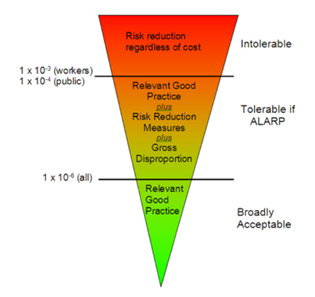
QRA is a systematic technique to analyze risks associated with oil and gas installation and comply with regulatory requirements in some cases. QRA integrates both major accident hazard consequences and its frequency, i.e. likelihood of occurrence of this consequence to estimate the numerical indicator of risk to both personnel and public, as applicable, this helps to demonstrate that calculated overall risk levels are either in Acceptable or As Low As Reasonably Practicable region, in accordance with risk tolerability criteria followed by respective end user. QRA will identify the key risk contributing scenarios / equipment / units within the facility to evaluate further risk reduction measures which will be subject to cost benefit analysis for further implementation.

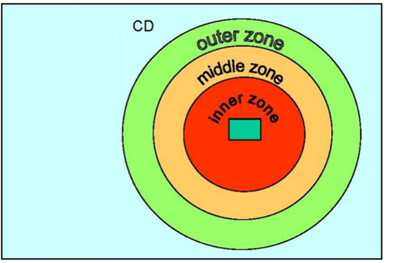
FERA assessment will also evaluate fire / explosion risk escalation possibilities to the adjacent plant units and operating facility to ensure adequate safe distance are available. FERA will assist in development / re-assessment of fire zones extent within facility which helps in managing separation distance between the independent plant, flare design and firewater design requirements.
Welcome banner Image

QRA outcome will provide input to key decision-making processes during early stage of the projects. QRA assures the stakeholders / senior management that the risk levels are either is Acceptable or in tolerable region as per the defined criteria. QRA also serves as a planning tool to advise on new development around the hazardous facility in accordance with Land Use Planning Criteria.

QRA can also include the H2S Zoning assessment to highlight the demarcation (ex., Red Zone, Amber Zone, Yellow Zone) within the high H2S handling facility and impose the entry restriction and required personnel protection for operation and maintenance personnels.

Welcome banner Image

QRA outcome will present the following risk:

  1. Individual Risk Per Annum (IRPA)
  2. Societal Risk (F-N Curve)
  3. Land Use Planning

QRA study can be performed in all stages of the project, however effective safety improvements and the implementation occur in Concept and FEED Stages. During Concept stage, QRA study helps in selecting the development option with the lowest HSE risk or one that is in ALARP. During FEED Stage, QRA Study primarily focuses on risk associated with the selected option and further design optimization to reduce the risk level to ALARP level. During EPC Stage, QRA Study mainly focuses on updating the FEED QRA based on the latest design during EPC and support finalizing the emergency response plan. One of the industry recognized software for conducting QRA is PHAST / SAFETI from DNV-G. Sample Contours typically established though FERA are presented below

Welcome banner Image

Collective experience of our team

0+

Projects

0+

Organizations

0+

Countries

Awesome Image
Seraphinite AcceleratorOptimized by Seraphinite Accelerator
Turns on site high speed to be attractive for people and search engines.